
Electrical Installation Condition Report’s (EICR) in an Entertainment Environment
Many people often ask “is an EICR a legal requirement”. The simple answer is no for a commercial premises, however for residential premises/dwellings it is now regulation for landlords to have a satisfactory EICR report for their occupied premises. These new Regulations require landlords to have the electrical installations in their properties inspected and tested by a person who is qualified and competent, at an interval of at least every 5 years. Landlords have to provide a copy of the electrical safety report to their tenants, and to their local authority if requested. Although these regulations don’t apply to commercial or privately owned residential properties, the fact that this has recently become law (since 1st July 2020 in the UK) gives us a good indication that an EICR is an important exercise. More information on this new regulation can be found here. Most insurance companies will stipulate that you need to have an up-to-date EICR for your premises or your insurance is at risk of not being valid.
Why is an EICR important?
A quarter of workplace fires are caused by faulty or incorrect use of electrics – perhaps overloaded circuits, poor workmanship or a lack of maintenance. As we’re sure everyone is aware, the impact of a fire on a premises can be catastrophic for a business and if the fire was caused by faulty electrics without a suitable EICR in place then the insurance may not pay-out. The other obvious reason for avoiding electrical faults and/or fires is peoples’ safety… be it your customers, staff and of course your own. Other that not wanting to cause harm to another person, you have a duty of care for persons you are responsible for and as soon as they step into your premises, this rule applies. How awful would you feel if a member of your staff or customer were to become injured by an electrical fault that could have been avoided. If you don’t feel bad then believe us, the HSE will make you feel terrible after the fines they are likely to impose against you, sometimes even a prison sentence and you can’t make money when your venue is closed.
How often should I have an EICR completed?
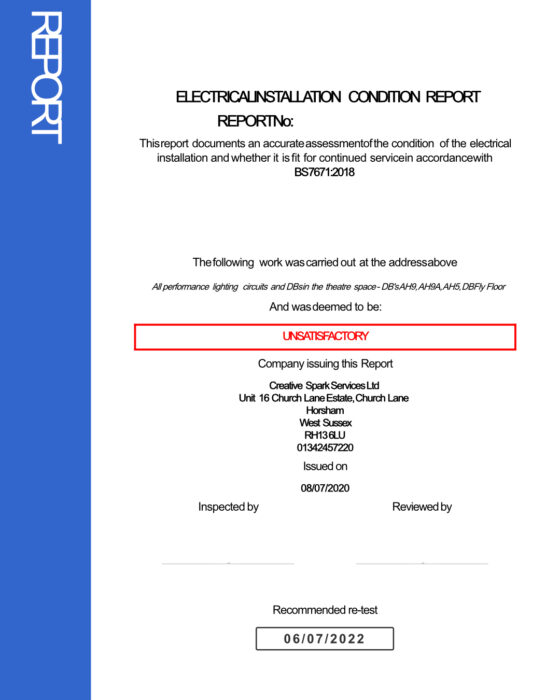
Here are some examples of the installation type and the recommended interval set out in the IET Guidance note 3 – Inspection and testing.
Highway power supplies – 6-8 years
Commercial, shops, offices, educational establishment, Hospitals (general areas), laboratories, Churches, Public houses, Village halls/community centres – 5 years
Leisure complex, places of public entertainment, theatres, Industrial, agricultural and horticultural, caravans, emergency lighting – 3 years
Cinemas 1-3 years
Hospitals (medical locations), caravan parks, Marinas, Fish Farms, Swimming pools, Fire alarms, launderettes, petrol filling stations – 1 year
Construction site installation – 3 months
Other factors to consider would be the age of the installation. An older installation would typically have a report carried out more frequently whereas a new installation could safely follow the guidance above. Generally, for an entertainment environment a report would be carried out every 1-3 years.
How is an EICR completed?
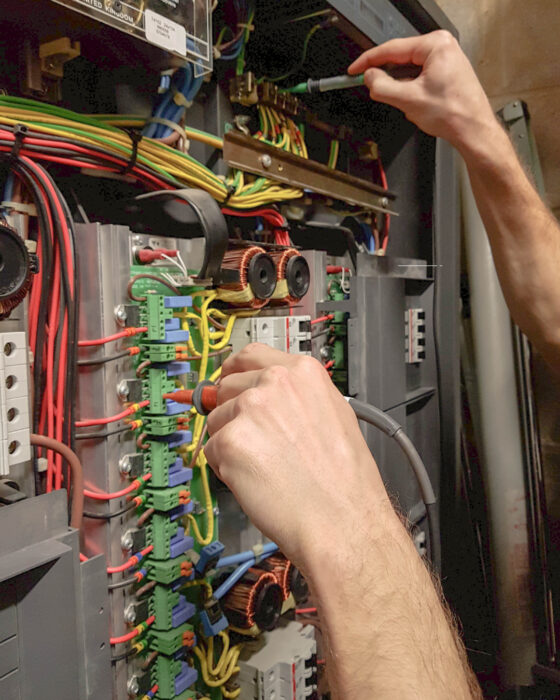
Most electrical contractors can offer EICR services, where an experienced and qualified electrician will inspect your electrical installation and carry out tests to make sure the cabling and accessories haven’t deteriorated. The intention is for the installation to be inspected and tested to the current edition of the wiring regulations (BS 7671 – 18th Edition). The electrician will then provide you with a report which will include any notes on the condition of the wiring along with the test results for the circuits in your installation which are obtained using specialist test equipment. The inspector will use classification codes to indicate any problems found. The codes are used as follows…
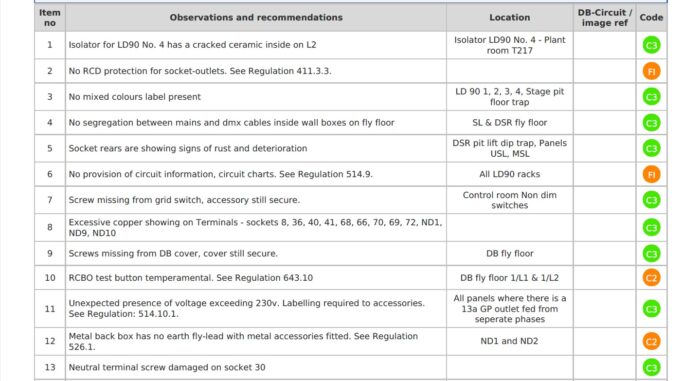
Code 1 (C1): Danger present. Risk of injury. The electrical inspector may make any C1 hazards safe before leaving the property.
Code 2 (C2): Potentially dangerous.
Further Investigation (FI): Further investigation required without delay.
Code 3 (C3): Improvement recommended. Further remedial work is not required for the report to be deemed satisfactory.
If a report includes C1, C2 or FI codes then the report will indicate that the condition of the installation is by default, unsatisfactory. A C3 code is the equivalent to an advisory on an MOT and would not make a report unsatisfactory.
How do I read the report?
EICR reports are complicated and full of lots of figures and notes that an unqualified person would not necessarily understand. A good inspector would offer to discuss the report once it has been completed to explain any remedial work that may be deemed necessary. The report is not deigned to be “easy to read”. It is packed with information and results so another electrician/inspector could easily locate information for the circuits and test results for future work. You are not obliged to use the same contractor to complete the remedial work but is sometimes more cost effective as they will have a good understanding of your installation after they have inspected it, meaning the work would normally be carried out more efficiently.
If you have received an EICR report and have not had the details explained to you, or you have taken on a premises and are not sure of the extent of the report then here are some tips on things to look for in the report…
Satisfactory/Unsatisfactory
It sounds obvious but find out if the report has instructed that your fixed wiring installation is in an acceptable condition. Every EICR report should be clearly labelled as “Satisfactory” or “Unsatisfactory”. If it is satisfactory then that’s great, but there may be some notes or C3 codes in the general notes section, suggesting remedial work may be a good idea or is something to look out for in the future. If the report is unsatisfactory then there should be information on why this is. In all instances of an unsatisfactory report, you should consult a qualified electrician for advice on how to get the issues fixed.
LIM
This is a common thing to see on an EICR and means “limitation”. This is where the inspector cannot obtain the information, they need to complete that section of the report. It doesn’t necessarily mean the report is not satisfactory. It usually means there is a justifiable reason for not testing that particular circuit or item, for example some light fittings that are not easily accessible.
FI
As mentioned above, an FI code mean that further investigation is required and will automatically mean your installation is deemed unsatisfactory. Unfortunately, this is sometimes missed and it has been known for there to be FI codes in a report, yet the report has been marked as “satisfactory”.
C1/C2
Again, like FI, these codes mean the installation is unsatisfactory. If a report has been marked as satisfactory yet you discover some C1 or C2 codes then unfortunately the installation is not satisfactory.
Using a specialist for entertainment installations
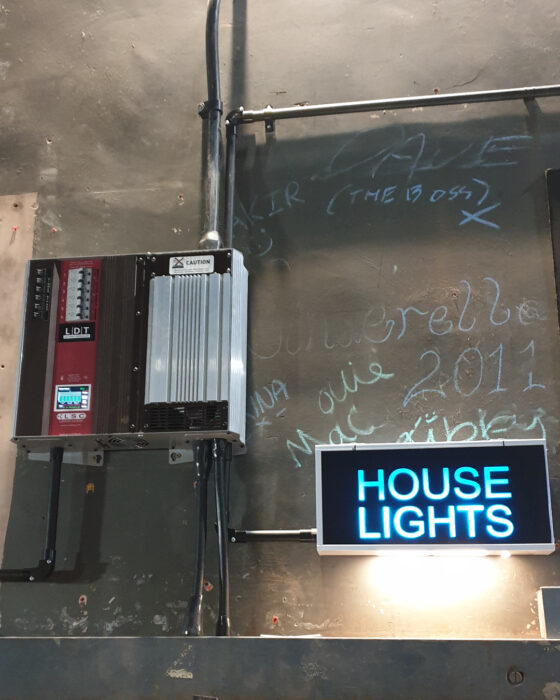
Very often we will visit a venue and discover the EICR report is covered with LIM or FI. This is usually because a non-specialist commercial electrician will not have the expertise or experience to inspect and test the equipment used in an entertainment venue. Items such as dimmer racks and house light systems are very sensitive to testing and an electrician without knowledge or experience of these can’t be blamed for avoiding unfamiliar items. They will be cautious not to damage the equipment using the high voltages used to test cable and accessory durability so may mark it as LIM or FI to avoid this damage. This often happens when a manager will arrange for an EICR to be carried out on the building and doesn’t separate the specialist entertainment installation from the rest of the venue, meaning it is bundled in with the “day-to-day” electrical installation that any electrician should be familiar with. There is nothing wrong with missing items from an EICR as long as a sample testing process has been carried out.
Tip:- If you find LIM in your report then it would be unclear to anyone when the last time that circuit was tested. We have known dimmer racks to be installed for many years yet never been tested as the contractors who regularly tested the building, always missed off the dimmer systems as they were unsure on how to test them.
What is Sample Testing?
This is where an inspector would test a percentage of a batch of similar circuits and record those results and findings. If problems were found in these samples, then additional testing would be necessary on the remaining circuits. It can sometimes be beneficial to opt for a sample testing programme over a fixed period. For example, an annual inspection could be scheduled over four years and each inspection would cover 25% of the installation, meaning the whole installation is thoroughly inspected at the end of the term. This option can be cost effective, reduce venue down time and allows a qualified electrician to regularly inspect an installation meaning the likelihood of a serious fault is dramatically reduced.
For one-to-one advice on getting an EICR carried out on your installation, don’t hesitate to email the venue support team at Creative Spark here, or call us on 01342 457 220 – Option 2.